November 1, 2026
The Rete Ovarii: Why Scientists Are Rethinking a Once-Overlooked Part of the Female Reproductive System
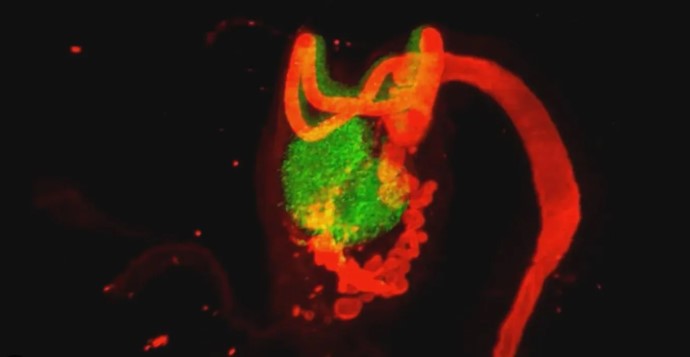
For more than a century, scientists believed a small structure connected to the ovaries served little purpose. Now, groundbreaking research suggests the rete ovarii may play a surprisingly important role in reproductive health.
When it comes to the human body, there's still so much we have yet to discover. Even in reproductive medicine, where decades of advancements have transformed fertility treatments, researchers continue to uncover new information about how the reproductive system functions.
One particularly fascinating discovery involves a small, often-overlooked structure called the rete ovarii.
Historically considered a vestigial structure, meaning a part of the body thought to have little or no remaining function, the rete ovarii was largely overlooked in modern discussions of female reproductive anatomy.
However, research published in the scientific journal eLife in 2025 is challenging that assumption.
Scientists have discovered evidence that the rete ovarii may communicate with the ovary, respond to biological signals, and release proteins that could help support ovarian function.
While additional research is needed, these findings offer an intriguing new perspective on the complexity of female reproductive health.
What Is the Rete Ovarii?
The rete ovarii is a small network of interconnected structures located within and adjacent to the ovary.
First described in human anatomy in 1870, the rete ovarii has been identified in numerous mammals, including humans, mice, dogs, cows, and sheep.
Despite being recognized for more than 150 years, its specific biological purpose has remained largely unknown.
Early medical researchers documented the structure in anatomical references, including older editions of Gray's Anatomy. However, because scientists could not identify a clear function, it eventually received less attention and was often described as an evolutionary remnant.
The rete ovarii is composed of three interconnected regions:
- Intraovarian Rete (IOR): Located within the ovary itself.
- Connecting Rete (CR): Links the internal and external portions of the structure.
- Extraovarian Rete (EOR): A tubular structure outside the ovary that may play a role in transporting fluids and releasing proteins.
Recent research suggests that these structures may participate in biological processes that scientists are only beginning to understand.
New Research Challenges What We Thought We Knew
In March 2025, a team of researchers published a study titled Rediscovering the rete ovarii, a secreting auxiliary structure to the ovary in the scientific journal eLife.
The study examined the structure and biological activity of the rete ovarii in mice using advanced imaging and laboratory techniques.
What researchers discovered was particularly interesting.
Rather than remaining biologically inactive, the rete ovarii exhibited several characteristics suggesting it may have an active role in supporting the ovary.
1. The Rete Ovarii May Transport Fluids Into the Ovary
Researchers introduced a fluorescent dye into the extraovarian rete to observe how fluid traveled through the structure.
They found that fluid moved from the rete ovarii toward the ovary, suggesting a directional transport system.
This finding raises questions about whether the structure helps deliver biological substances that influence ovarian function.
2. It May Release Proteins That Support Reproductive Health
The study also identified proteins within the rete ovarii that could influence ovarian biology.
One protein of particular interest was insulin-like growth factor binding protein 2 (IGFBP2), which helps regulate the availability of growth factors involved in cellular development.
Growth factors play important roles in ovarian follicle development.
Ovarian follicles are small, fluid-filled structures within the ovaries that contain immature eggs. Their growth and development are essential components of the reproductive process.
While researchers have not established that the rete ovarii directly controls follicle development, its potential involvement in delivering biologically active proteins opens new opportunities for investigation.
3. It May Communicate With Other Biological Systems
Perhaps one of the most fascinating findings is that the rete ovarii appears closely associated with several systems involved in maintaining reproductive health.
Researchers observed connections or close relationships with surrounding blood vessels, nerve projections, and immune cells.
The structure also exhibits characteristics suggesting it may respond to hormonal changes.
These findings have led scientists to explore whether the rete ovarii acts as a communication structure, potentially receiving biological signals and influencing the surrounding ovarian environment.
Rather than functioning independently, the ovary may receive additional support from surrounding structures that have historically received limited scientific attention.
What Could This Discovery Mean for Female Fertility?
The ovaries are essential to reproductive health. They produce eggs, release reproductive hormones, and participate in processes that influence menstruation, ovulation, and fertility.
Maintaining healthy ovarian function requires complex interactions between hormones, developing follicles, surrounding tissues, and the body's broader biological systems.
The discovery that the rete ovarii may be more active than previously believed introduces new questions about how these systems work together.
Could the rete ovarii contribute to maintaining a healthy ovarian environment?
Might its secreted proteins influence follicle development?
Could future research uncover additional factors involved in ovarian aging or reproductive disorders?
These are possibilities researchers may explore as our understanding develops.
Importantly, the current research does not establish that the rete ovarii directly influences fertility outcomes in humans.
The primary findings come from animal studies, and scientists have not yet demonstrated whether the structure is essential for reproduction or whether changes in its function contribute to infertility.
Nevertheless, the research represents an important reminder that reproductive biology is highly complex, and even familiar anatomical structures may hold unanswered questions.
Why Understanding the Complete Reproductive System Matters
One of the most valuable lessons from this research is that reproductive health involves much more than any single organ, hormone, or biological process.
Fertility is influenced by numerous interconnected factors, including ovarian function, egg quality, hormone regulation, age, reproductive anatomy, and underlying medical conditions.
A patient's reproductive challenges may involve one or several of these factors, making individualized evaluation especially important.
As medical research continues to uncover new information about reproductive biology, healthcare providers have additional opportunities to better understand how these systems interact.
This evolving understanding reinforces the importance of looking at reproductive health comprehensively rather than focusing solely on individual symptoms or isolated test results.
Dr. Peyman Saadat's Approach to Comprehensive Fertility Care
At Reproductive Fertility Center, understanding each patient's individual reproductive health is a central part of developing personalized fertility treatment recommendations.
Dr. Peyman Saadat, MD, FACOG, is a double board-certified specialist in Obstetrics and Gynecology and Reproductive Endocrinology and Infertility, with extensive experience helping individuals and couples navigate complex fertility challenges.
Dr. Saadat recognizes that fertility is influenced by numerous interconnected biological factors. His approach emphasizes evaluating each patient's medical history, reproductive health, hormonal function, and individual circumstances when recommending treatment.
Rather than approaching infertility with a one-size-fits-all solution, he works to understand the underlying factors that may be contributing to a patient's difficulty conceiving.
This comprehensive approach is especially meaningful in a field where scientific knowledge continues to evolve.
Discoveries such as the emerging research surrounding the rete ovarii reinforce the value of understanding reproductive health as a complex, interconnected system.
Although rete ovarii research has not yet led to established fertility treatments or clinical testing protocols, it highlights why ongoing scientific investigation remains so important.
For Dr. Saadat and the team at Reproductive Fertility Center, the broader objective remains consistent: helping patients understand their reproductive health and providing evidence-based, individualized fertility care.
The Future of Reproductive Medicine: There's Still More to Discover
The renewed scientific interest in the rete ovarii reminds us that even well-studied areas of human anatomy can contain unanswered questions.
Advancements in microscopy, molecular biology, genetic analysis, and reproductive research now allow scientists to investigate structures and processes that previous generations could not fully examine.
As these discoveries continue, researchers may identify additional biological pathways that contribute to ovarian health and reproductive function.
For individuals facing infertility, this progress represents the continued evolution of a medical field dedicated to understanding and addressing reproductive challenges.
While the rete ovarii is not currently an established target for fertility treatment, its study illustrates how new scientific discoveries may eventually expand our understanding of reproductive medicine.
And sometimes, the most fascinating discoveries begin by taking another look at something we thought we already understood.
Understanding Your Fertility Starts With Personalized Care
Every fertility journey is unique, and understanding the factors influencing your reproductive health is an important first step.
At Reproductive Fertility Center, Dr. Peyman Saadat and his team provide comprehensive fertility evaluations and personalized treatment options designed around each patient's individual needs.
Whether you're beginning to explore your fertility, experiencing difficulty conceiving, or considering advanced reproductive treatments such as IVF, our team is here to help you better understand your options.
Schedule a consultation with Reproductive Fertility Center to take the next step toward your family-building goals.
Research Reference
Anbarci, D. N., McKey, J., Levic, D. S., Bagnat, M., & Capel, B. (2025). Rediscovering the rete ovarii, a secreting auxiliary structure to the ovary. eLife.
https://doi.org/10.7554/eLife.96662
*Medical Disclaimer: This article is intended for educational purposes and discusses emerging scientific research. The findings described were primarily observed in animal studies and have not established new diagnostic or treatment recommendations for human infertility. This content is not a substitute for individualized medical advice.
